
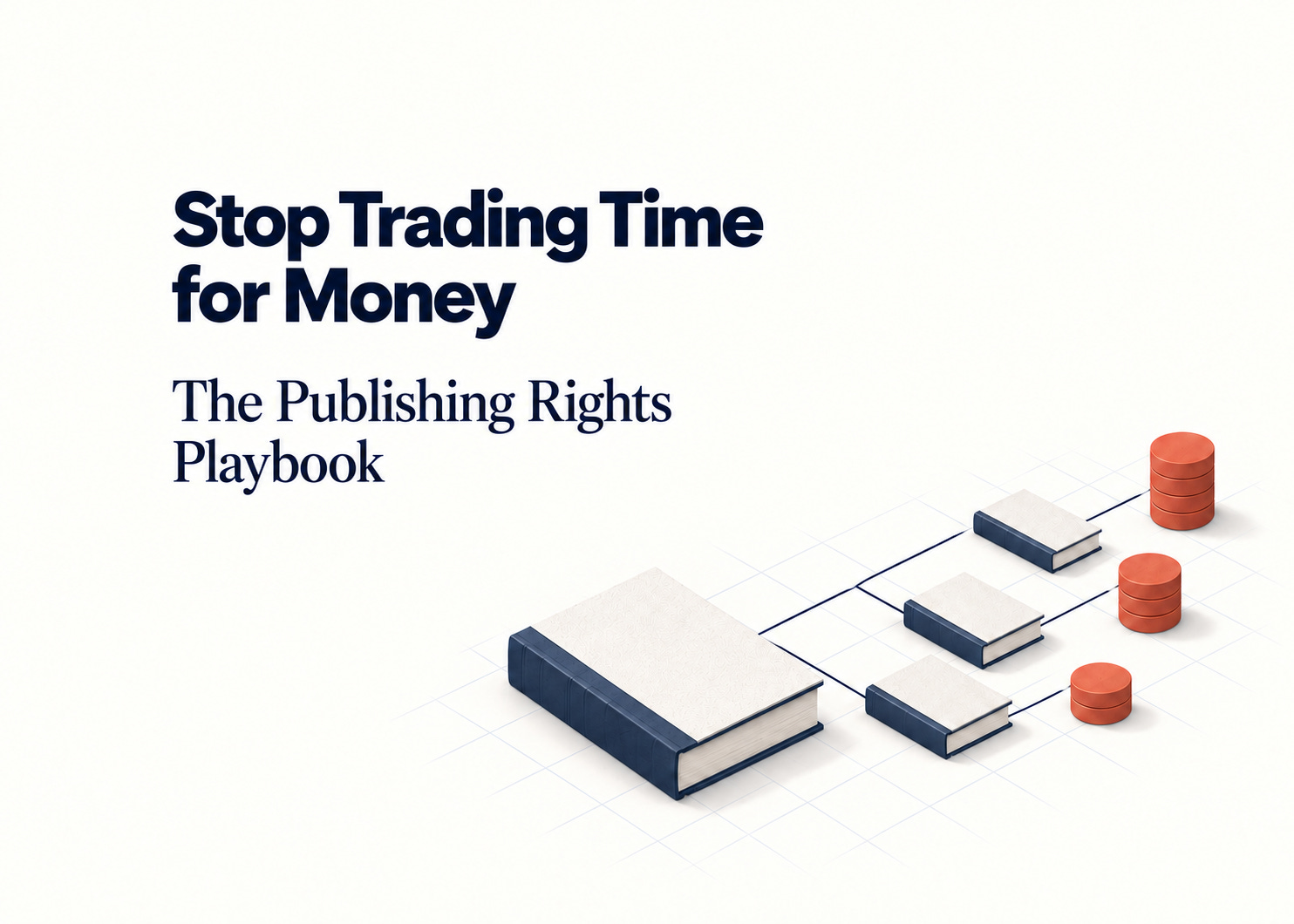
Michael Jackson's ATV Music purchase put him on the ownership side of songs other people kept using. This article explains how those rights earn money and gives business owners a practical way to compare a license with a one-time fee.
Quick Answer
Music publishing rights let an owner earn from uses of a song’s words and music. A similar idea applies to other creative work: keep ownership and give customers permission to use it for a stated purpose and time. That can bring in payments more than once, but only if people want the work, your rights are clear, and you can collect what you are owed.
What Michael Jackson Bought in 1985
Michael Jackson bought the ATV Music publishing catalog in 1985. It included rights in many songs written by John Lennon and Paul McCartney. He was buying a stake in the songs themselves, which other people could keep recording, performing, and licensing. He was not buying every recorded version of those songs.
The price is widely reported as $47.5 million, including by The New Yorker. In Sony and the Jackson estate’s 2016 announcement, the estate gave a different figure: $41.5 million in net acquisition cost. The announcement does not explain the full difference. One is a reported purchase price; the other is the estate’s stated net cost.
In 1995, Jackson and Sony joined their publishing businesses in a 50–50 venture. In 2016, Sony paid the estate $750 million for its half of Sony/ATV. That total included previously committed distributions and reflected other deal adjustments, according to the announcement and Sony’s financial disclosure. By then, the venture held or administered far more than the original ATV purchase. You cannot divide $750 million by $47.5 million and call the answer Jackson’s investment return.
The lesson is in what he bought: a stake in songs that could earn money through repeated use, without him having to record each new version himself.
What Publishing Rights Can Pay For
A song can earn publishing income when it is played in public or reproduced, including through certain streams and downloads. The U.S. Copyright Office’s guide explains that public-performance payments and payments for making and distributing copies, called mechanical royalties, are collected in different ways. Putting a song in a film or ad can require a separate deal. Who gets paid, and how much, depends on the rights and contracts.
A composition is the song’s words and music. A master is one recorded performance of it. The owners may be different, and permission to use the song does not automatically give someone permission to use a particular recording. Sony’s announcement said the estate kept Jackson’s master recordings and Mijac Music, the company holding his own songwriting catalog, when it sold the Sony/ATV stake.
Outside music, the comparable tool is a license. A photographer might let a client use an image for one campaign while keeping the right to license other uses. A training company might sell annual permission to use its course. Those are possible deals, not payments that arrive simply because a person made something.
Would You Rather Take the Fee or Keep the Rights?
A fee puts money in your hands now. A license may pay over time, but those later payments may be smaller, late, or never arrive. Keeping rights also means finding customers and managing the deal.
Say a business wants a training manual. Its creator could take $8,000 and sign over the copyright, or take less now and charge each branch for an annual license. The figures are hypothetical. The second choice only works if the contract leaves the creator with those rights and the branches actually pay.
The Copyright Office explains that copyright can be transferred in whole or in part and that a transfer generally must be signed. Buying a copy of a manual or image does not automatically buy its copyright. A commission can also raise work made for hire questions, which may change who owns the work from the start. Check the signed agreement before offering the same work to anyone else.
Three Questions to Ask Before You Count on Royalties
Start here: What do I own? Who would pay to use it again? How much will it cost me to collect?
If you cannot prove ownership, you may not be able to license the work. If no customer needs it again, there may be no second payment. If a buyer promises a percentage but never reports sales, you may have no practical way to check the bill.
Owning something and getting paid for it are separate jobs.
For another look at how a price shapes a deal, read The Invisible Price Tag: Prestige Before Cost. And if you are counting on an audience to buy, The Death of the Follower Count explains why reach alone is a poor sales forecast.
Next, we’ll put the choice on paper: what to check in your rights, what to ask for in a license, and how to compare it with a fee today.
The paid section includes a rights inventory, a plain-English contract checklist, and a worked comparison of a fee against three years of license payments.
