
QUICK ANSWER
You build an exceptionally loyal brand community by creating identity, participation, shared experiences, and emotional connection—not by offering more discounts.
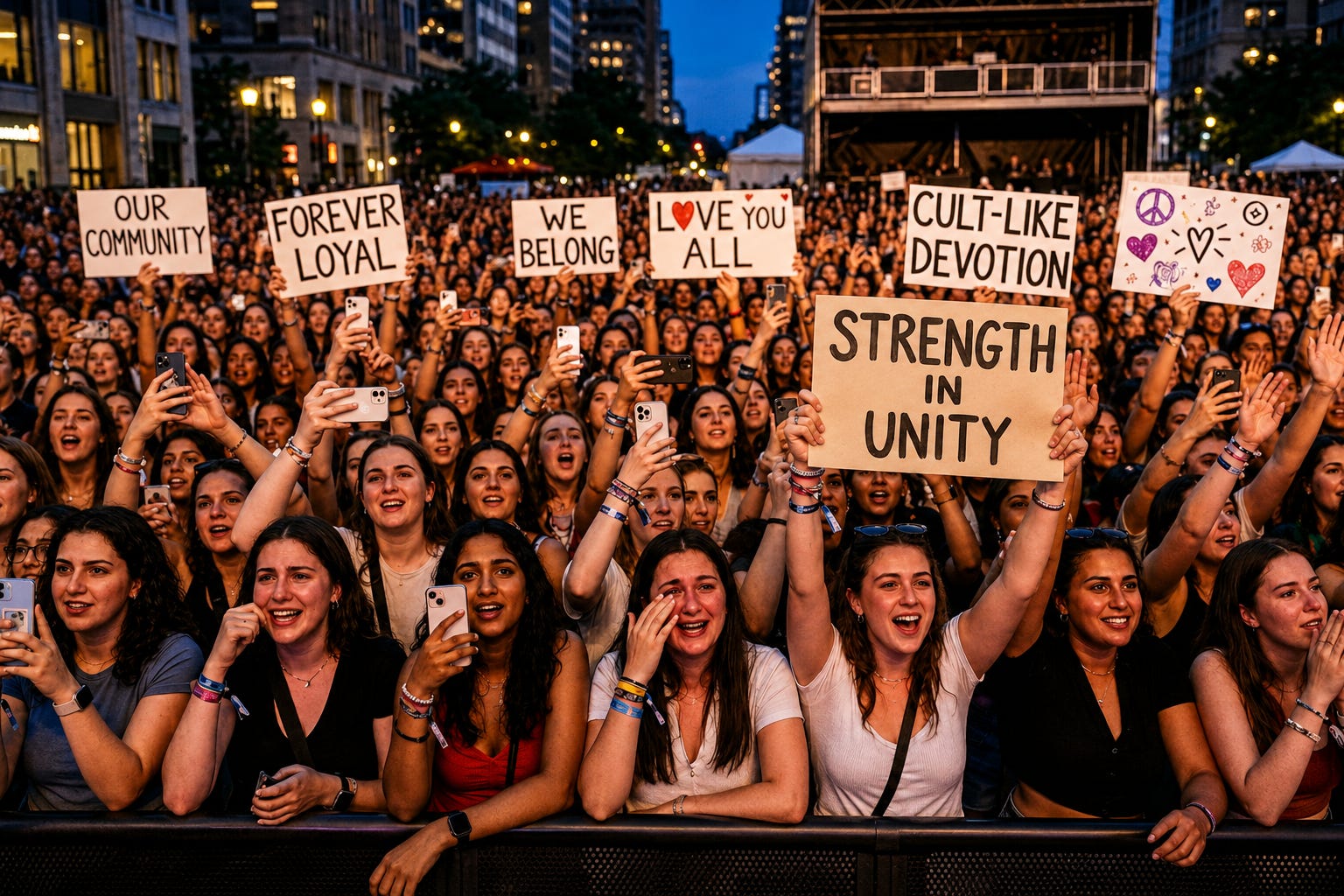
Taylor Swift’s community is not built on rewards points, coupons, or promotions. It is built on storytelling, shared rituals, insider knowledge, participation, and a sense of belonging.
According to Harvard Business Review, true loyalty comes from community and affinity, not transactions. Communities create emotional attachment that traditional loyalty programs often fail to achieve.
The lesson for businesses is simple:
Stop trying to build customers.
Start building members.
BLUF (BOTTOM LINE UP FRONT)
The brands winning today are creating communities, not audiences.
Consumers have more choices than ever before. Product advantages disappear quickly. Pricing advantages disappear even faster.
What remains difficult to copy is belonging.
Taylor Swift’s fan community demonstrates how identity, participation, and emotional investment can create extraordinary loyalty that survives controversies, economic downturns, platform changes, and competitive alternatives.
Businesses that focus exclusively on transactions risk becoming commodities.
Businesses that build communities create advocates.
EXECUTIVE SUMMARY
Key Findings
Community-driven loyalty is stronger than discount-driven loyalty.
Identity-based communities increase engagement and retention.
Shared rituals strengthen member commitment.
Participation creates emotional ownership.
Storytelling builds long-term affinity.
Key Risks
Treating community as a marketing channel.
Over-commercializing member relationships.
Focusing only on sales metrics.
Ignoring member-to-member connections.
Key Opportunities
Higher customer retention.
Increased referrals.
Greater organic reach.
More user-generated content.
Lower customer acquisition costs over time.
Main Recommendation
Build systems that help members connect with each other—not just with your company.
WHY THIS MATTERS NOW
Consumer trust is increasingly difficult to earn.
Harvard Business Review notes that many loyalty programs are transactional rather than relational, attracting deal-seeking behavior instead of genuine affinity.
At the same time, online communities have become central to how consumers discover products, validate purchasing decisions, and form opinions.
The rise of creator economies, fan economies, private communities, and member-driven brands reflects a broader shift:
People increasingly want connection, identity, and belonging.
The companies that understand this shift will have a significant competitive advantage.
THE REALITY CHECK
Core Problem
Most businesses confuse customers with community members.
A customer buys.
A community member belongs.
Those are not the same thing.
Operational Bottleneck
Many organizations invest heavily in acquisition while neglecting relationship infrastructure.
They spend money attracting people but very little helping people connect.
Why Old Approaches Fail
Discounts create temporary behavior.
Community creates lasting behavior.
As Harvard Business Review explains, many loyalty programs encourage transactions rather than emotional commitment.
When competitors offer a better discount, transactional loyalty disappears.
Community loyalty often remains.
MYTH VS. REALITY
Myth
Loyal customers come from great products.
Reality
Great products create satisfaction.
Communities create devotion.
Taylor Swift’s success is not solely based on music quality.
She has built participation systems that transform listeners into contributors, advocates, and community members.
THE PIVOT
The Old System
Sell products
Run promotions
Reward purchases
Measure transactions
The New System
Build identity
Encourage participation
Create rituals
Strengthen belonging
Measure engagement and advocacy
The goal changes from customer retention to community retention.
REAL-WORLD EXAMPLES
Example 1: Taylor Swift and the Swifties
Taylor Swift created a participatory culture.
Fans decode clues.
Fans share theories.
Fans create content.
Fans teach new members community norms.
Researchers and leadership experts have highlighted how shared experiences, emotional connection, and mutual support strengthen the Swiftie community.
Lesson
Participation creates ownership.
People support what they help build.
Example 2: Harley-Davidson
Harley-Davidson did not build loyalty through motorcycles alone.
It built identity.
Owners became members of a tribe.
Events, rides, apparel, and local chapters strengthened community bonds.
Lesson
Products may attract people.
Identity keeps them.
Example 3: LEGO Ideas
LEGO allows community members to submit product concepts.
Some community-generated ideas become real products.
Lesson
Participation increases emotional investment.
People become loyal when they have influence.
COMMUNITY MAILBAG
Question 1
What is the fastest way for a small business to begin building community?
Question 2
How can a company scale a community without losing authenticity?
QUICK TAKE
The fastest way to build community is to create consistent interaction between customers.
Start with:
A private group
A member forum
Live discussions
User-generated content initiatives
Community recognition programs
The objective is not content distribution.
The objective is relationship creation.
PREMIUM TRANSITION
In the free section, we examined why communities outperform traditional loyalty programs and how Taylor Swift transformed fans into participants.
Premium subscribers get the operational blueprint:
Exactly how to build a community from scratch
The systems required
The content structure
The moderation framework
The growth model
The measurement dashboard
The scaling process
If you’re serious about building an audience that stays, refers, and advocates for your business, the implementation begins below.
