
Quick Answer
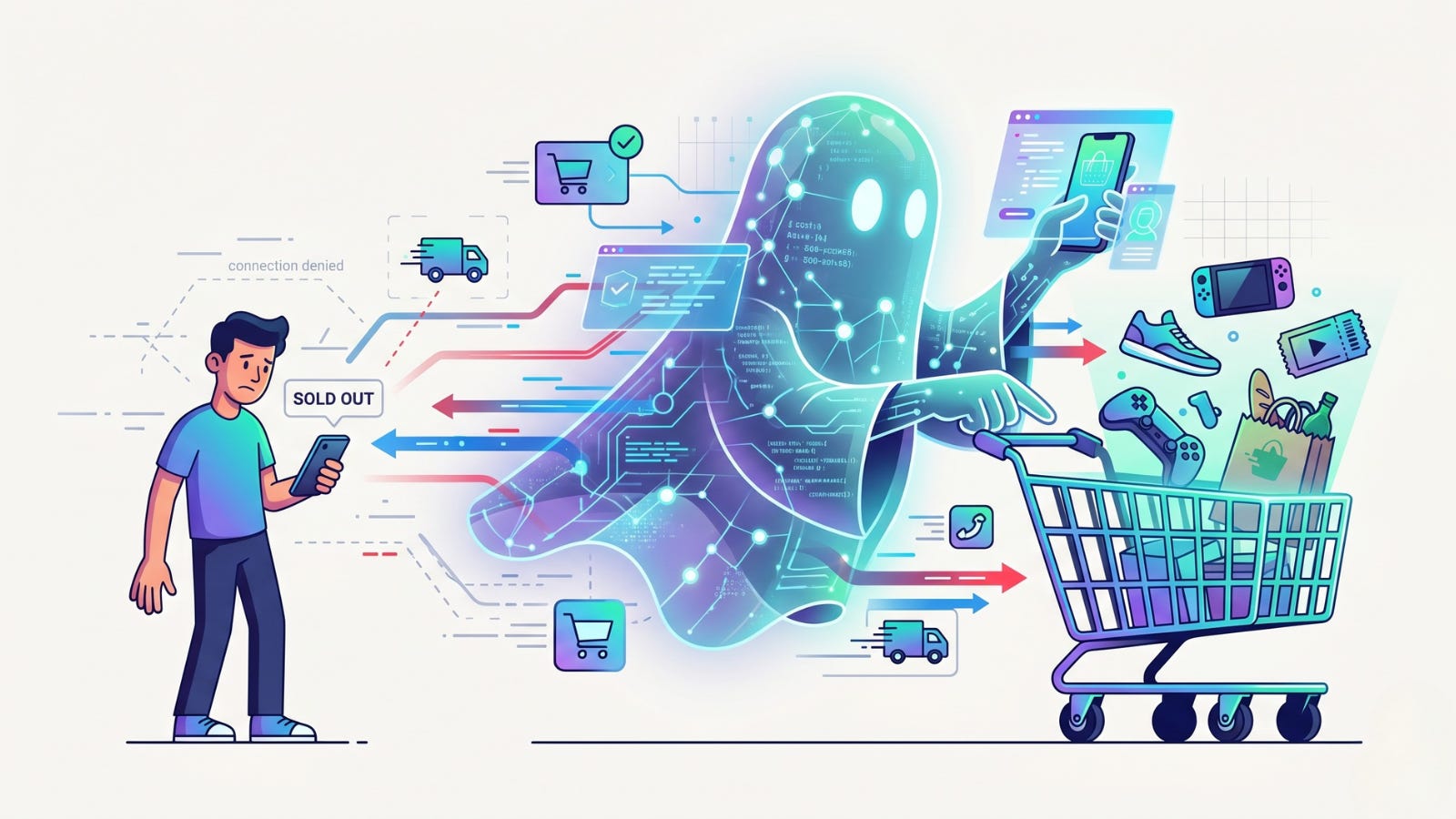
Bots are no longer just a sneaker problem.
The same automation tools that buy limited products faster than humans are increasingly influencing gig work, online marketplaces, and digital commerce. The result is a growing trust problem where consumers struggle to buy products fairly and workers feel they are competing against software instead of people.
Why This Matters
If you have ever tried to buy a limited sneaker release, concert ticket, gaming console, or collectible online, you have probably experienced the same frustration:
You show up on time.
You click immediately.
You still lose.
Many consumers assume they were simply too slow.
In reality, they may have been competing against automated purchasing systems designed to operate faster than any human can.
According to Nike, some major SNKRS launches receive significant bot traffic, with the company reporting billions of blocked bot requests every month.
What started as a resale problem has become something larger.
Today, automation is affecting how products are purchased, how work is distributed, and how digital marketplaces function.
The New Digital Divide
There are now two different marketplaces operating simultaneously.
The first marketplace consists of normal people:
Consumers
Workers
Drivers
Families
Small business owners
The second marketplace consists of:
Automated scripts
Proxy networks
Fake accounts
Scalping operations
Fraud rings
The challenge is that software operates at machine speed while humans operate at human speed.
When platforms are not designed properly, machines gain the advantage.
Why Consumers Lose
Bots create artificial scarcity.
A product may technically be available, but average customers never get a fair opportunity to purchase it.
Instead, inventory is often captured by automated systems and moved to secondary marketplaces where prices increase dramatically.
For consumers, the result is simple:
Higher prices
Less availability
Reduced trust in brands
Over time, many customers stop participating entirely.
Why Workers Lose
The same concerns appear inside portions of the gig economy.
Drivers across multiple platforms frequently report concerns about account fraud, unfair order distribution, and suspected automation abuse.
Whether every complaint is accurate is less important than the larger issue:
Trust is declining.
When workers believe a marketplace is unfair, they leave.
When customers believe a marketplace is unfair, they leave.
Eventually the platform loses both sides.
The Real Risk
Many companies view anti-bot systems as a technology expense.
That is a mistake.
Anti-bot protection is really:
Customer retention
Workforce retention
Brand protection
Revenue protection
A marketplace only works when people trust it.
Once trust disappears, growth becomes difficult to sustain.
The Bottom Line
Bots are not just a technology issue anymore.
They are a business issue.
They affect pricing.
They affect trust.
They affect customer loyalty.
And they affect the willingness of workers to participate in digital marketplaces.
The companies that solve this problem first will gain a significant competitive advantage because they will offer something increasingly rare:
A marketplace built for humans instead of machines.
Premium subscribers can continue reading for the complete Human-Only Marketplace Blueprint, including anti-bot frameworks, retail countermeasures, gig economy protections, operational audits, KPI benchmarks, and implementation plans
