
The Executive Summary
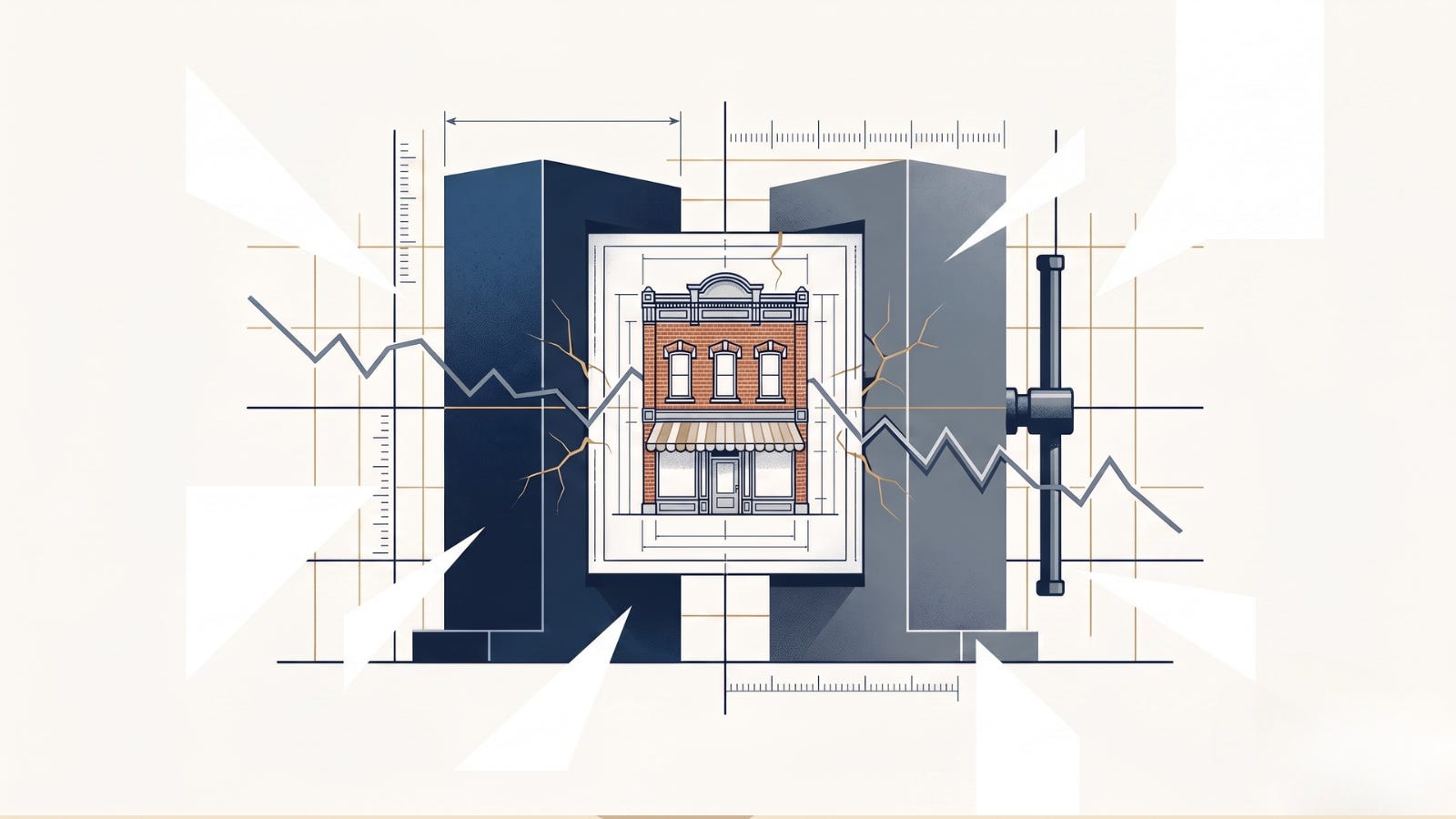
U.S. small businesses are currently facing a severe margin squeeze that threatens their operational survival. While macro economic data points to steady overall GDP growth, localized surges in labor overhead and fuel costs are forcing independent merchants into a defensive corner. To protect their margins, business owners are hiking consumer prices. However, this strategy comes at a volatile time, as local foot traffic and consumer demand are beginning to soften nationwide, leaving businesses caught between rising costs and shrinking customer volume.
The Catalyst: What’s Happened and Why Now
The economic pressure on independent merchants reached a critical tipping point in late June 2026. According to the newly released NFIB Economic Trends Report, small business optimism has experienced a sharp decline, with the index pinned below its historic average at 95.3. This drop is primarily triggered by aggressive spikes in domestic inflation and rising operational overhead. Compounding the issue, the Federal Reserve’s revised Core PCE metrics show inflation remaining stubborn at 3.4%.
Main Street is currently dealing with a dual crisis of labor and energy. Data from the National Federation of Independent Business reveals that a historic 14% of small businesses now cite labor costs as their number one operating problem, marking the highest percentage in the survey’s history. Concurrently, unpredictable spikes in fuel prices have become impossible for logistics, retail, and hospitality sectors to absorb internally. Out of viable cost-cutting options, a net 36% of small business owners have raised average selling prices. This represents the steepest price-hiking trend observed since early 2023, risking immediate consumer pullback.
The Case Study: Main Street Hospitality and Retail Realities
The impact of this margin squeeze is highly visible across domestic hospitality and independent retail sectors. For instance, independent restaurant operators and local logistics providers are facing the immediate brunt of these compounding expenses. In urban retail hubs, small business owners are dealing with fixed overhead costs that refuse to budge alongside wages that must rise to retain talent.
According to regional economic summaries from the Federal Reserve Beige Book, independent merchants are experiencing a distinct turning point where passing costs onto the consumer is hitting a ceiling. When local diners and boutique shoppers reduce their discretionary spending, small businesses cannot rely on high volume to offset their thin margins. The current environment reveals that unlike large corporations with massive supply chains, independent merchants lack the capital buffers to weather prolonged stagflationary pressures without adjusting their core business models.
Strategic Implications and Hidden Risks
Businesses that ignore this structural shift face significant financial exposure. A major risk for leadership is assuming that traditional price increases will continue to sustain revenue. As consumer sentiment cools, aggressive price hikes can alienate loyal local customer bases, accelerating drops in foot traffic and driving buyers toward larger, discount-driven competitors.
Furthermore, many business leaders make the mistake of cutting costs in areas that directly damage the customer experience, such as reducing staff numbers to a degree that compromises service quality. This creates a negative feedback loop: poorer service leads to lower retention, which further degrades the margins leaders are trying to protect. Operational drag, inventory backlogs, and tightening credit lines mean that maintaining cash flow flexibility must take precedence over chasing unprofitable top-line growth.
The Bottom Line: Key Takeaways
The Shift: Small business optimism has dropped to 95.3 as a net 36% of owners raise prices to combat a dual crisis of 3.4% Core PCE inflation and surging labor overhead.
The Risk: Independent merchants risk severe consumer pullback and falling foot traffic as price-hiking strategies hit the limit of what local customer demand can bear.
The Strategic Priority: Corporate leaders and merchants must prioritize cash flow optimization, talent retention strategies, and operational efficiency over simple price escalation.
Premium Conversion Bridge
Understanding this market shift is only the first step. Our premium subscribers get the full operational playbook for this strategy, including the implementation roadmap, KPI dashboards, and plug-and-play templates needed to execute it safely and effectively.
