
Quick Answer
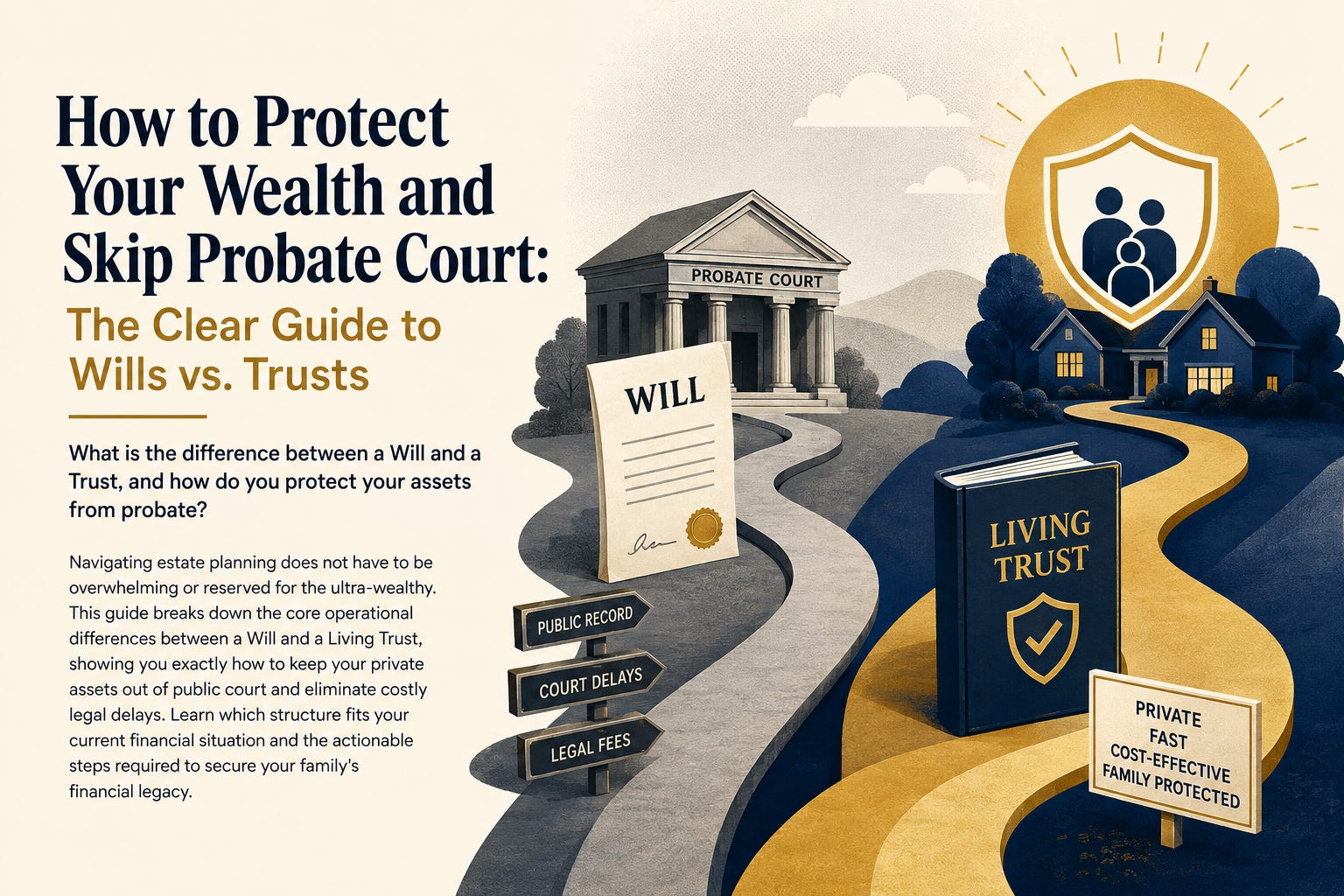
A will directs how your assets get distributed after death, but it has to pass through probate first: a court process that’s public, slow, and often expensive. A living trust holds your assets under a trustee’s management, both while you’re alive and after you’re gone, which lets those assets skip probate entirely, but only if the trust is properly funded. Most people end up needing both.
Probate can tie up an inheritance for months and puts your estate’s details on the public record. That’s a real cost if you own real estate, have minor children, or are part of a blended family. A properly funded trust removes that friction and keeps things private.
The Reality Check
Wills stay popular because they’re cheap and simple to write. The catch: once you die, your will still has to clear probate, where a court validates the document, settles your debts, and only then releases assets to your heirs.
That process is public record. Anyone can look up what you owned and who got it. It can also drag on for months, longer if someone contests the will or the estate is complicated.
A living trust sidesteps all of this. Because you transfer ownership of your assets into the trust while you’re still alive, those assets never enter your probate estate. Here’s the part people miss: a trust only avoids probate if it’s actually funded, meaning your assets are formally retitled in the trust’s name. An unfunded trust protects nothing.
WILLS VS. LIVING TRUSTS: THE CORE DIFFERENCES
Feature:
Takes Effect
Will:
After death
Living Trust:
As soon as it’s funded, during your lifetime
======================================================================
Feature:
Probate
Will:
Required
Living Trust:
Avoided, if properly funded
======================================================================
Feature:
Privacy
Will:
Public record
Living Trust:
Stays private
======================================================================
Feature:
Ongoing Management
Will:
None; one-time distribution by executor
Living Trust:
Handled by a named trustee
======================================================================
Feature:
Setup Cost
Will:
Lower upfront
Living Trust:
Higher upfront, often cheaper long-term
======================================================================
Feature:
Best For
Will:
Simple estates, naming guardians
Living Trust:
Complex estates, incapacity planning, avoiding probate
A will is a legal document naming who inherits your assets and who guards your minor children. A trust is a legal arrangement where a trustee, someone with a fiduciary duty to act in your beneficiaries' best interest, manages and distributes your assets on your terms.
The Utility Framework: Which One Fits You
Map your actual estate before choosing a structure.
List every asset: bank and retirement accounts, life insurance, real estate, vehicles, valuables.
Total what you owe. Debts get settled before heirs receive anything.
Decide whether you want a one-time payout (a will) or staggered, conditional distributions, like releasing funds to a child at 25 (a trust).
Ask whether you'll need someone managing your finances if you're incapacitated. A trust can handle that without a court-appointed conservatorship. A will can't.
If your estate is simple, a will alone might do the job. If you own real estate, want privacy, or want incapacity planning built in, a living trust earns its cost.
