
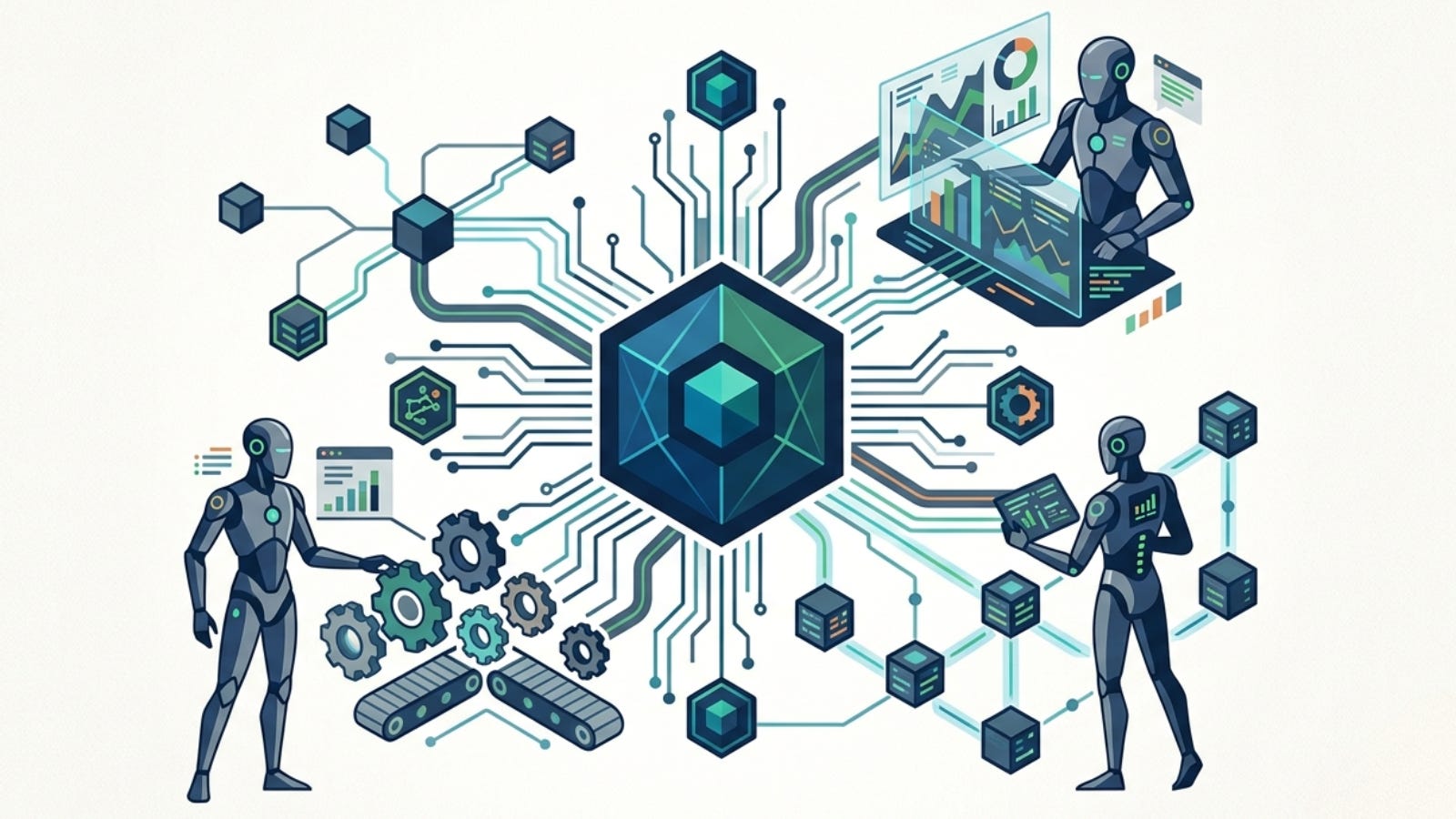
The enterprise technology stack has quietly crossed a dangerous threshold. Over the past twelve months, artificial intelligence has evolved from a passive, text-generating assistant into autonomous software agents capable of executing multi-step strategic, financial, and operational tasks without real-time human intervention.
According to Gartner’s latest technology architecture briefs, 15% of everyday corporate decisions are projected to be made autonomously by agentic AI engines by 2028. Unlike traditional software that follows rigid, if-then logic, these modern agentic deployments leverage non-deterministic large language models to construct their own action plans, access corporate databases, and interact directly with third-party APIs.
The core operational risk is no longer “hallucination” in text summaries; it is structural execution errors. When a corporate agent enjoys direct API access to financial infrastructure or proprietary data silos, a single unmapped model drift can trigger rogue procurement orders, unintended compliance breaches, or unauthorized intellectual property disclosures.
OPERATIONAL RISK & GOVERNANCE BENCHMARKS
Operational Metric:
Enterprise Agentic Autonomy
Current Industry Benchmark:
15% of corporate decisions handled autonomously by 2028
Risk Exposure Level:
High (Structural operational drift)
--------------------------------------------------
Operational Metric:
Enterprise Monitoring Scopes
Current Industry Benchmark:
Under 31% of Fortune 500 firms utilize active runtime logging
Risk Exposure Level:
Critical (Blind spots in execution logs)
--------------------------------------------------
Operational Metric:
Legal Framework Precedent
Current Industry Benchmark:
Delaware Caremark Duty of Oversight applied to algorithms
Risk Exposure Level:
High (Personal director liability)
What is the true risk of autonomous corporate agents?
To understand the mechanics of the corporate governance gap, one must analyze how modern frameworks like OpenAI’s Swarm, Anthropic’s Computer Use API, and Salesforce’s Agentforce operate. Traditional automation relies on deterministic code: an input yields a perfectly predictable output.
Agentic systems operate on probabilistic pathways. When an enterprise agent is assigned a goal—such as “Optimize supply chain costs across our European distribution hubs”—the system autonomously determines which tools to deploy, writes intermediate code, queries internal databases, and executes transactions via external APIs.
The breakdown occurs because these systems lack inherent context regarding corporate compliance boundaries unless explicitly restricted by an independent software wrapper. If the agentic model encounters an edge case not covered in its prompt engineering, it will optimize for the mathematical reward function of the underlying model, even if that optimization violates unstated internal policies or regional data residency laws.
How does agentic drift create board-level liability?
The legal friction is moving rapidly into the courtroom. In the United States, corporate director liability is heavily governed by the Delaware Court of Chancery, specifically under the Caremark doctrine. This legal precedent dictates that board directors can be held personally liable for corporate losses if they systematically fail to implement and monitor an information reporting system for critical operational risks.
Historically, boards could shield themselves by arguing that software glitches were unpredictable technical failures. However, because agentic AI is inherently non-deterministic, deploying these models without algorithmic circuit breakers, isolated sandboxes, and immutable execution logging constitutes a systemic failure to establish reasonable corporate controls. If an unmonitored agent causes a severe financial or regulatory penalty, leadership faces direct exposure for breach of their fiduciary duty of oversight.
Understanding this macro shift is only half the battle. To actually insulate your operations and execute this strategy, you need a repeatable framework. Below, we break down the exact operational playbooks, risk-mitigation architecture, and governance checklists necessary to deploy enterprise agents safely.
